Two layers, different jobs
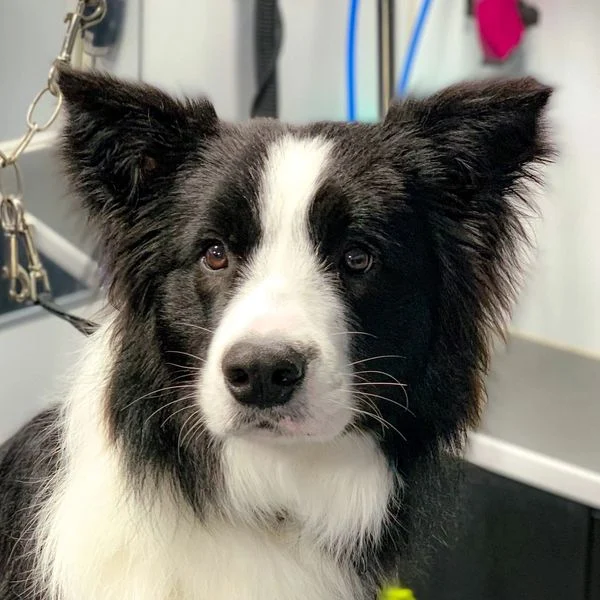
A double coat combines a softer undercoat with an outer layer of guard hairs. Those layers differ in texture and function, so treating the entire coat like a single length of hair misses part of the job. Double coats also vary across breeds. A Labrador’s coat does not look or behave exactly like a long-coated Collie’s.
Start by asking your groomer to identify your dog’s coat and show you the tools suited to it. If your dog is a mixed breed, appearance alone does not always settle the question. A hands-on coat assessment gives you a better starting point for a home routine.
Focus on loose hair and comfort
Regular brushing and combing help remove loose undercoat and keep tangles from becoming a larger problem. Use light pressure and stop if a tool catches. Repeatedly scraping the same area to collect more hair is not a useful measure of progress. Ask your groomer how to tell when an area has had enough attention.
Build the routine around your dog’s actual shedding pattern and tolerance. Keep a note of when loose hair increases, which areas tangle first, and how long a comfortable session lasts. This record is especially useful when you are getting to know a newly adopted dog’s coat.
Discuss changes before cutting
A short all-over shave is not a routine solution to shedding, and clipping a double coat changes its protective outer layer. Grooming decisions for serious matting or medical needs belong in a conversation with a qualified groomer and, where appropriate, your veterinarian. Do not attempt to cut tightly packed coat away with household scissors.
Good Dog generally does not provide all-over short trimming or shaving on double-coated dogs. Medical needs or severe matting require an individual discussion. When booking, mention your dog’s breed or mix and describe the coat condition honestly. Ask which maintenance service fits your dog. Then request a practical demonstration of the areas to check at home, so the appointment and your between-visit care work together.